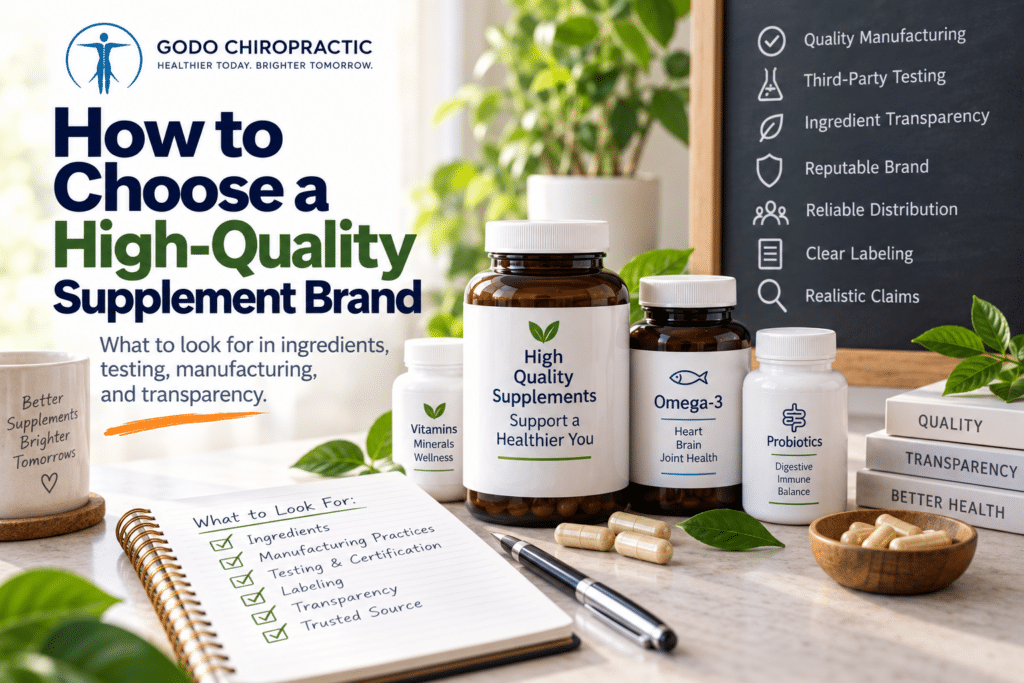
Choosing a supplement brand can be frustrating because almost every bottle is designed to look trustworthy. Clean packaging, impressive terminology, and premium pricing can create a strong first impression without necessarily telling you much about the product inside.
A better approach is to look for evidence of manufacturing quality, ingredient transparency, testing, labeling, and reliable distribution. Those details give you something more concrete to evaluate than marketing alone.
How Do You Choose a High-Quality Supplement Brand?
Look for clear labeling, reputable manufacturing practices, transparent ingredient information, meaningful quality-control testing, reliable distribution, and third-party certification when applicable. Avoid relying only on price, branding, or terms such as “premium,” “professional-grade,” or “pharmaceutical-grade.”
Why Does the Supplement Brand Matter?
Two products containing the same named ingredient can still be very different. They may use different ingredient forms, suppliers, dosages, manufacturing processes, testing procedures, storage conditions, or quality-control standards.
That means comparing only the front label or the ingredient name may not tell you enough about what you are actually buying.
A supplement brand is better evaluated by the systems behind its products than by how polished the packaging looks.
If you want to evaluate the individual product itself rather than the company, see our guide on how to know if a supplement is high quality .
7 Signs of a More Transparent Supplement Brand
You do not need to investigate every company like a laboratory scientist. A handful of practical signals can help you separate useful information from marketing noise.
Clear Ingredient Labeling
The Supplement Facts panel should clearly identify ingredients, amounts per serving, serving size, and other required information.
Manufacturing Information
Look for information about manufacturing standards, quality-control procedures, and how finished products are evaluated.
Testing Transparency
Stronger manufacturers may provide information about identity, purity, contaminants, potency, or other product specifications.
Third-Party Certification
Independent certification can provide additional verification of certain product or manufacturing characteristics. The important question is what the certification actually evaluates.
Ingredient Sourcing
Some manufacturers provide information about ingredient origin, suppliers, standardization, or sourcing practices.
Realistic Claims
Be cautious when a brand relies heavily on dramatic disease claims, guaranteed outcomes, or language that sounds too good to be true.
Reliable Distribution
Consider whether the products are sold through identifiable and reliable sellers rather than unknown sources with unclear storage or fulfillment.
What Are Professional-Grade Supplements?
The term “professional-grade” can sound reassuring, but it is not a separate FDA classification and should not be treated as proof of quality by itself.
Read the professional-grade supplements guide →Start With the Supplement Facts Label
The label is one of the simplest places to begin because it gives you information you can compare directly from one product to another.
Review:
- Serving size
- Amount of each dietary ingredient
- Ingredient forms
- Other ingredients
- Suggested use
- Manufacturer or distributor information
- Warnings or storage instructions
A professional-looking label does not prove quality, but incomplete, vague, or confusing labeling is a reasonable reason to investigate further.
What Does Good Manufacturing Practice Mean?
Dietary supplement manufacturers in the United States are subject to Current Good Manufacturing Practice requirements.
These requirements address areas such as manufacturing processes, quality control, packaging, labeling, and recordkeeping.
A company that explains its manufacturing and quality-control systems in clear, specific language gives you more useful information than one that relies entirely on vague phrases such as “premium quality” or “advanced formula.”
What Kind of Testing Should You Look For?
The phrase “tested for quality” sounds reassuring, but it is worth asking what that testing actually means.
Depending on the product and manufacturer, testing may evaluate:
- Ingredient identity
- Potency or strength
- Purity
- Microbial contamination
- Heavy metals
- Other contaminants
- Finished-product specifications
Not every manufacturer publishes the same level of testing information, so transparency can vary considerably between brands.
What Do NSF, USP, and Third-Party Testing Actually Mean?
Certification logos can be useful, but different programs evaluate different things. Understanding what a certification verifies can help you interpret those symbols more accurately.
Read the supplement testing and certification guide →Browse Professional Brands and Save 20%
If you already know which products or brands you use, you can shop eligible professional supplements through the Godo Chiropractic Fullscript storefront.
Shop Fullscript & Save 20%What Does Third-Party Certification Tell You?
Third-party certification means an independent organization has evaluated certain characteristics of the product or manufacturing process.
Depending on the certification program, that may involve testing product contents, evaluating contaminants, reviewing manufacturing practices, or verifying specific standards.
Certification does not prove that a supplement will produce a particular health outcome. It can, however, provide another layer of verification about what is in the product or how it was made.
Do Not Let Marketing Language Make the Decision for You
Terms such as “premium,” “advanced,” “clinical strength,” “professional-grade,” or “pharmaceutical-grade” can sound impressive, especially when they are paired with attractive packaging and a higher price.
Those words should not replace objective information about the product, manufacturer, testing, formulation, and distribution.
If you are comparing practitioner-distributed products with supplements sold through traditional stores, our practitioner-grade vs retail supplement comparison explains why the sales channel alone does not determine quality.
Does a More Expensive Brand Mean Better Quality?
Not necessarily.
Price can reflect ingredient costs, testing, manufacturing, distribution, packaging, advertising, and many other business expenses.
A higher price may sometimes reflect meaningful product differences, but price alone is not evidence that a supplement is better.
At the other extreme, choosing solely by the lowest price can create its own problems. The better goal is to find a product that offers reasonable value while still meeting the quality standards that matter to you.
How to Save Money Without Choosing on Price Alone
If you use supplements regularly, cost matters. The key is to compare cost per serving and recurring expenses without losing sight of product quality.
Read: How to Save Money on Professional-Grade Supplements →How to Buy Professional Supplements Online
Even a good brand can become harder to evaluate if you are unsure who is actually selling or fulfilling the product. Product quality matters, but so does the source you buy it from.
Read the online supplement buying guide →Questions to Ask Before Choosing a Supplement Brand
You do not need a perfect answer to every question. The purpose of this checklist is to help you make a more informed decision instead of relying entirely on a brand name or marketing claim.
- Who manufactures the product?
- Are the ingredients and amounts clearly identified?
- Does the company explain its manufacturing standards?
- What testing information is available?
- Is independent certification available where relevant?
- Does the brand make realistic claims?
- Can you identify where the product is coming from?
- Is the product appropriate for what you are trying to accomplish?
Supplement Brand Quality FAQs
How can you tell if a supplement brand is high quality?
Look for clear labeling, manufacturing information, testing transparency, reliable distribution, and reputable third-party certification when applicable.
Does third-party tested mean a supplement is better?
Third-party testing can provide additional verification of certain product characteristics, but it does not automatically establish clinical effectiveness.
Are professional supplement brands higher quality?
Not automatically. Professional distribution can be one characteristic of a brand, but individual products and manufacturers still need to be evaluated.
Does a higher price mean a better supplement?
No. Price is influenced by many factors and should not be used as the only measure of supplement quality.
What should I look for on a supplement label?
Review serving size, ingredient amounts, ingredient forms, other ingredients, manufacturer information, directions, and relevant warnings.
Where can I buy professional supplement brands?
Many professional supplement products are available through online practitioner dispensaries and other established distribution channels.
How Do You Know If a Supplement Is High Quality?
Choosing a reputable company is only part of the process. The next step is evaluating the individual supplement itself—its ingredients, formulation, testing, labeling, and certification.
Read: How Do You Know If a Supplement Is High Quality? →Shop Professional Supplements and Save 20%
Browse eligible supplement brands through the Godo Chiropractic Fullscript storefront.
Shop Fullscript & Save 20%Disclaimer: This article is for general educational purposes and is not intended to diagnose, treat, cure, or prevent disease or replace individualized healthcare advice. Supplement suitability varies by person. Savings apply to eligible products available through the Godo Chiropractic Fullscript dispensary. Product availability, pricing, ordering, payment processing, fulfillment, and shipping are managed through Fullscript.