
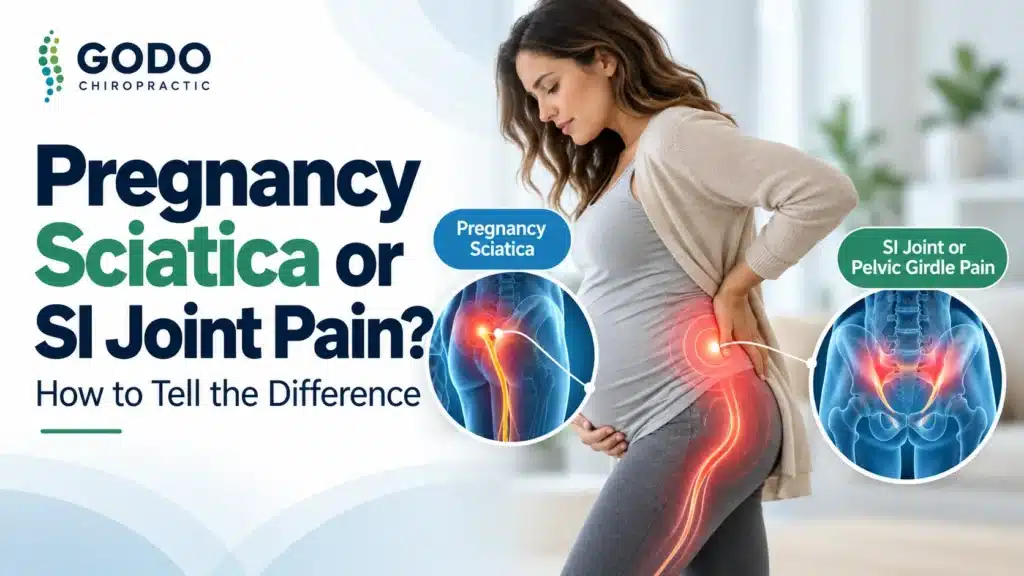
Pregnancy can cause pain in the lower back, buttock, pelvis, and leg—but not every pain that travels into the buttock or thigh is true sciatica.
Two patterns that can overlap are pregnancy-related pelvic girdle pain, which can involve the sacroiliac (SI) region, and sciatic-type nerve pain, which more often follows a radiating pattern into the leg.
The distinction matters because the evaluation, activity modifications, and treatment plan may be different.
Pregnancy Sciatica or SI Joint Pain: What Is the Difference?
Sciatica usually describes nerve-related symptoms that travel from the lower back or buttock into the leg. These may include burning, shooting pain, tingling, numbness, or weakness.
Pregnancy-related pelvic girdle pain often stays closer to the pelvis, buttock, SI region, pubic area, groin, or upper thigh and may worsen with activities such as walking, stairs, standing on one leg, getting in and out of a car, or turning in bed.
Some people have features of both, so the location of the pain alone is not enough to diagnose the cause.
Why Back, Pelvic, and Leg Pain Can Develop During Pregnancy
Pregnancy changes how the body loads the lower back and pelvis. As the uterus grows, the center of gravity shifts, abdominal muscles lengthen, and the muscles around the hips and back work differently.
The American College of Obstetricians and Gynecologists (ACOG) notes that back pain is common during pregnancy and that changes in posture, joint stress, abdominal support, and ligament flexibility can all contribute.
That does not mean pain should automatically be dismissed as “normal pregnancy pain.” The pattern still needs to make sense.
What Does Sciatica During Pregnancy Usually Feel Like?
Radiating Leg Pain
Sciatic-type pain often travels from the lower back or buttock into the back or side of the thigh and may continue below the knee.
Burning or Electric Pain
People often describe nerve pain as burning, shooting, sharp, electric, or like a line of pain rather than a broad ache.
Tingling or Numbness
Pins-and-needles or altered sensation in the leg or foot makes nerve involvement more likely and deserves closer evaluation.
Weakness
True weakness in the leg or foot is more concerning than pain alone and should be assessed promptly.
What Does Pregnancy-Related SI or Pelvic Girdle Pain Feel Like?
Pregnancy-related pelvic girdle pain can be felt around one or both SI regions, across the lower back, in the buttocks, around the pubic bone, groin, hips, or upper thighs.
The NHS guidance on pelvic pain in pregnancy notes that symptoms may be aggravated by walking, stairs, standing on one leg, turning in bed, or moving the legs apart.
Those activity-specific triggers can be useful clues that the pain is part of a pelvic girdle pattern rather than a classic nerve-root pattern.
Sciatica vs. SI Joint or Pelvic Girdle Pain During Pregnancy
More Suggestive of Sciatica
Pain traveling farther down the leg, especially below the knee, with burning, tingling, numbness, or weakness.
More Suggestive of Pelvic Girdle Pain
Pain concentrated around the pelvis, buttock, SI area, groin, or pubic region that is strongly affected by walking, stairs, rolling in bed, or standing on one leg.
Either Can Affect the Buttock
Buttock pain by itself does not tell you which structure is involved. The rest of the symptom pattern matters.
Both Can Coexist
Pregnancy-related mechanical pain and nerve irritation are not mutually exclusive. An examination may be needed when the pattern is mixed.
What May Help With Pregnancy-Related Back or Pelvic Pain?
For uncomplicated pregnancy-related musculoskeletal pain, conservative strategies often begin with activity modification and comfortable movement.
- Stay active within comfortable limits rather than avoiding all movement.
- Reduce activities that clearly aggravate symptoms, especially repeated one-leg loading or excessive stair use.
- Sit down to get dressed if standing on one leg increases pelvic pain.
- Try a pillow between the knees when sleeping on your side.
- Use supportive footwear.
- Ask your obstetric provider whether a maternity support belt is appropriate.
- Discuss exercise changes with your obstetric provider before starting a new program.
ACOG notes that appropriate physical activity can reduce back pain during uncomplicated pregnancies, but exercise should be modified when symptoms occur and discussed with the obstetric provider.
When Should Pregnancy Sciatica or SI Pain Be Evaluated?
An evaluation becomes more useful when pain is persistent, repeatedly returns, changes the way you walk, interferes with sleep, or begins limiting routine activities.
I would also want to know whether the symptoms stay around the pelvis or travel down the leg, whether there is numbness or tingling, which movements reproduce the pain, and whether turning in bed, stairs, sitting, walking, or standing on one leg changes the symptoms.
Those details help distinguish a more local pelvic girdle pattern from possible nerve irritation.
How I Evaluate Pregnancy-Related Back, Pelvic, and Leg Pain
When a pregnant patient comes to Godo Chiropractic with back, buttock, pelvic, or leg pain, the first step is determining whether the symptoms appear appropriate for conservative musculoskeletal care.
Depending on the history and stage of pregnancy, the examination may include:
- Lower-back and hip movement
- Pelvic and SI-region movement patterns
- Walking and weight-bearing tolerance
- Muscle function and side-to-side differences
- Neurological testing when leg symptoms are present
- Positions and movements that reproduce or relieve symptoms
Pregnancy changes how examinations and treatment are performed. Care should be adapted for comfort, stage of pregnancy, and any guidance from the obstetric provider.
For more about pregnancy-specific chiropractic care, visit the Pregnancy Chiropractor Chicago service page.
Pregnancy Back or Leg Pain Warning Signs
Back, pelvic, or leg pain during pregnancy should not automatically be treated as a musculoskeletal problem.
Contact your obstetric provider promptly if the pain is severe, persistent, or occurs with:
- Vaginal bleeding
- Fever
- Burning or pain with urination
- Regular painful contractions
- Fluid leaking from the vagina
- Significant calf pain or swelling
- New or progressive leg weakness
Seek urgent medical care for new loss of bladder or bowel control, numbness around the groin or saddle region, rapidly worsening weakness, chest pain, severe shortness of breath, or other major neurological symptoms.
ACOG specifically advises contacting the obstetric provider when back pain occurs with fever, urinary symptoms, or vaginal bleeding because causes other than ordinary musculoskeletal pain need to be ruled out.
Related Pregnancy and Sciatica Resources
Frequently Asked Questions About Pregnancy Sciatica and SI Pain
How can I tell if pregnancy leg pain is sciatica?
Sciatic-type symptoms are more likely when pain travels from the lower back or buttock into the leg and is accompanied by burning, tingling, numbness, or weakness. An examination is useful when the pattern is unclear.
Can SI joint pain during pregnancy go into the leg?
Yes. Pregnancy-related pelvic girdle pain can spread into the buttock or thigh. That is one reason it can be mistaken for sciatica, especially when the pain is mainly one-sided.
Why does pelvic pain hurt when I turn over in bed?
Turning in bed changes how the pelvis and surrounding muscles are loaded. Pain with rolling, stairs, getting out of a car, or standing on one leg is commonly reported with pregnancy-related pelvic girdle pain.
Is pregnancy sciatica dangerous?
Many cases are musculoskeletal and not dangerous, but new weakness, loss of bladder or bowel control, saddle-area numbness, severe progressive pain, or other neurological symptoms require urgent medical evaluation.
Can a chiropractor evaluate pregnancy-related SI pain?
Yes. A chiropractor can evaluate musculoskeletal contributors to lower-back, pelvic, and SI-region pain and determine whether conservative care appears appropriate. Pregnancy-related red flags and conditions outside the musculoskeletal system should be referred to the obstetric or medical provider.
Should I tell my OB or midwife about the pain?
Yes, especially when symptoms are new, severe, persistent, or changing. Your obstetric provider should be aware of significant pain during pregnancy and can help rule out pregnancy-related complications.
Pregnancy Back, SI, or Leg Pain Making It Hard to Move?
If your symptoms appear musculoskeletal and your obstetric provider has not identified a pregnancy-related complication, an evaluation can help determine whether the pain pattern is more consistent with pelvic girdle/SI irritation, sciatica, or another mechanical problem.
Godo Chiropractic serves patients in Lakeview Chicago and surrounding neighborhoods.
Schedule Your $29 EvaluationNot Every Pregnancy Leg Pain Is Sciatica
Pregnancy can change how the lower back, pelvis, hips, and surrounding muscles are loaded, and several pain patterns can overlap.
The most useful clues are where the symptoms travel, whether numbness or tingling is present, which movements aggravate the pain, and whether the problem behaves more like nerve pain or pelvic girdle pain.
At Godo Chiropractic, I evaluate the complete pattern rather than assuming every buttock or leg symptom is sciatica.
Godo Chiropractic
Lakeview Chicago


