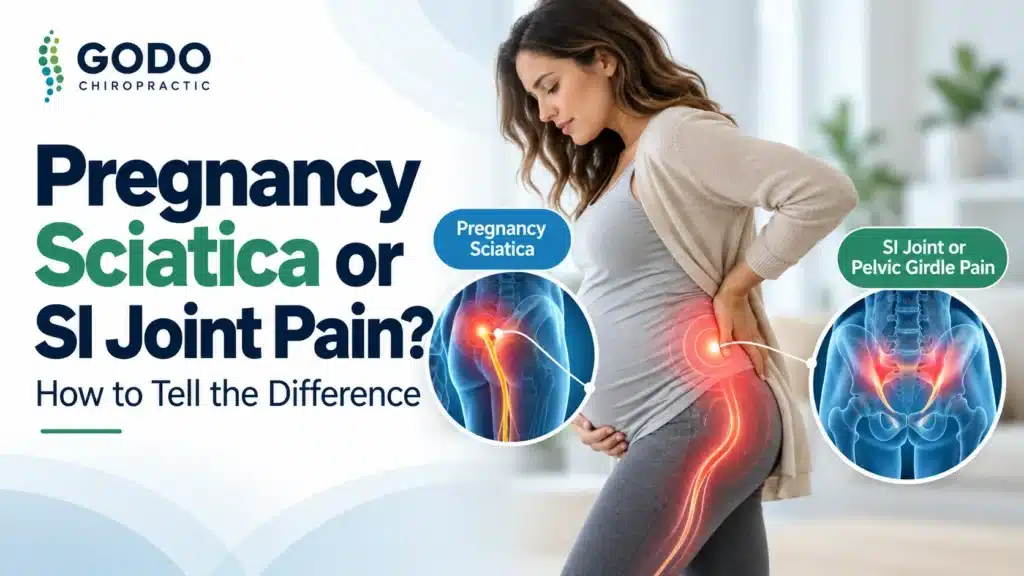
Pregnancy back pain is common, but that does not mean every new ache should automatically be dismissed as “just part of being pregnant.”
As pregnancy progresses, changes in body weight, posture, pelvic mechanics, ligament laxity, sleep position, and activity levels can all change the way the lower back and pelvis are loaded.
For many people, the result is aching, stiffness, pelvic discomfort, or pain that becomes worse with standing, sitting, walking, rolling in bed, or getting up from a chair.
The important question is not simply whether pregnancy can cause back pain. It is what type of back pain you are experiencing, what seems to trigger it, and whether the symptoms are consistent with a common mechanical problem or something that needs medical evaluation.
Quick Answer: Is Back Pain Normal During Pregnancy?
Lower back pain is common during pregnancy. Changes in posture, body weight, pelvic position, muscle demand, and ligament laxity can all contribute.
However, pregnancy back pain can come from different sources, and the treatment approach should depend on the pattern of symptoms.
- Lower back aching is common as pregnancy progresses.
- Pelvic and sacroiliac joint discomfort may occur.
- Sciatic-type pain may sometimes travel into the buttock or leg.
- Sleeping, walking, standing, or rolling in bed can aggravate symptoms.
- Not all pain is caused by posture alone.
- Severe, sudden, or unusual symptoms should be discussed with your obstetric provider.
Why Does Pregnancy Cause Lower Back Pain?
Pregnancy changes the mechanical demands placed on the spine and pelvis.
As the abdomen grows, the center of mass shifts forward. The muscles of the lower back, hips, pelvis, and abdominal wall must adapt to those changes.
Several factors may contribute to pregnancy back pain:
- Changes in weight distribution
- Increased load on the lumbar spine
- Changes in pelvic position
- Ligament laxity
- Reduced abdominal support
- Muscle fatigue
- Changes in walking pattern
- Different sleeping positions
- Reduced exercise or activity
- Previous episodes of lower back pain
These changes do not mean that pregnancy is damaging the spine. They simply mean that the body is adapting to a rapidly changing mechanical environment.
What Does Pregnancy Back Pain Usually Feel Like?
Pregnancy-related back pain can feel different from person to person.
Some people describe a dull ache across the lower back. Others feel pain more on one side near the sacroiliac joint or upper buttock.
Common patterns include:
- Achiness after standing for a long time
- Stiffness after sitting
- Pain while rolling over in bed
- Discomfort while walking
- Pain when getting out of a chair or car
- One-sided pelvic or buttock pain
- Pain after lifting, bending, or household activity
Symptoms that are mechanical often change with movement or position, although that pattern alone does not confirm the cause.
Can Pregnancy Cause Pelvic or Sacroiliac Joint Pain?
Yes. Some pregnant patients feel pain lower than the lumbar spine, near the pelvis or sacroiliac joints.
This pain may be felt:
- On one side of the pelvis
- Across the back of the pelvis
- Near the upper buttock
- While walking
- While climbing stairs
- While standing on one leg
- While rolling over in bed
The pelvis normally moves during walking and other activities. During pregnancy, changes in ligament laxity, muscle control, and load distribution may make certain movements less comfortable.
An examination can help determine whether the pain appears to be primarily lumbar, pelvic, muscular, neurological, or related to another cause.
Can Pregnancy Cause Sciatica?
Pregnancy can sometimes be associated with sciatic-type symptoms, although not every leg pain during pregnancy is true sciatica.
Sciatic-type symptoms may include:
- Pain traveling into the buttock
- Pain down the back or side of the leg
- Tingling
- Numbness
- Burning discomfort
- Occasional weakness
These symptoms may involve irritation of a nerve root, local muscle tension, pelvic mechanics, or another structure.
If symptoms include persistent numbness, progressive weakness, or significant neurological changes, they should be evaluated promptly.
For more information, see our Sciatica Chiropractor in Chicago page.
Why Pregnancy Back Pain May Get Worse During Everyday Activities
Standing
Long periods of standing can increase muscle fatigue through the lower back, hips, and pelvis.
Sitting
Remaining seated for long periods can create stiffness and make position changes more uncomfortable.
Walking
Changes in gait and pelvic motion may make longer walks more difficult later in pregnancy.
Sleeping
Side sleeping, mattress support, and repeated nighttime position changes can affect back and pelvic comfort.
Rolling in Bed
Turning requires coordinated movement through the pelvis, hips, trunk, and abdominal wall.
Lifting
Lifting children, groceries, laundry, or other objects may become more demanding as pregnancy progresses.
Is Pregnancy Back Pain Caused by Bad Posture?
Not necessarily.
Pregnancy naturally changes posture as the body adapts to a growing abdomen and shifting center of mass.
There is no single “perfect” pregnancy posture that prevents back pain.
A more useful goal is to reduce long periods in any one position, maintain comfortable movement, and support the muscles that help control the spine and pelvis.
Posture may contribute to symptoms, but it should not be treated as the only explanation for pregnancy back pain.
What Can Help Pregnancy Back Pain?
For uncomplicated mechanical back pain, simple strategies may improve comfort.
- Change positions regularly
- Avoid standing or sitting for several uninterrupted hours
- Use supportive pillows during sleep
- Stay active within the limits recommended by your obstetric provider
- Use comfortable footwear
- Modify lifting technique
- Take short walking or movement breaks
- Use gentle exercises when appropriate
Some patients also benefit from professional evaluation when pain is persistent, recurrent, or interfering with normal activity.
Any exercise or treatment plan during pregnancy should take into account the stage of pregnancy, medical history, obstetric recommendations, and individual symptoms.
Is Chiropractic Care Safe During Pregnancy?
Chiropractic care is commonly used during pregnancy for musculoskeletal complaints such as lower back, pelvic, and neck pain.
Care should be modified appropriately for pregnancy, and the examination should determine whether chiropractic treatment is suitable for the individual patient.
Pregnancy-specific modifications may include:
- Different patient positioning
- Lower-force techniques when appropriate
- Avoiding prolonged pressure on the abdomen
- Using supportive pillows or cushions
- Adapting treatment as pregnancy progresses
For a detailed discussion, read Is Chiropractic Care Safe During Pregnancy?
What Does a Pregnancy Chiropractor Evaluate?
A pregnancy chiropractic examination should involve more than simply locating the painful spot.
Depending on the symptoms, evaluation may include:
- Lumbar range of motion
- Pelvic motion
- Sacroiliac joint function
- Hip mobility
- Muscle strength and control
- Neurological findings when indicated
- Walking mechanics
- Movement during sitting and standing
- Sleep position
- Daily activity demands
- Previous back or pelvic injuries
- Changes in symptoms as pregnancy progresses
The purpose is to determine whether the complaint appears mechanical and whether conservative chiropractic care is appropriate.
When Should You See a Chiropractor During Pregnancy?
You may consider an evaluation if:
- Back pain keeps returning
- Pain is limiting walking or exercise
- Sleeping becomes difficult because of back or pelvic pain
- You have repeated pain while standing or sitting
- You feel one-sided pelvic or buttock discomfort
- Back pain is interfering with work or daily activity
- You want to understand whether the pain appears mechanical
Chiropractic care should complement — not replace — obstetric care.
If symptoms suggest a pregnancy-related medical issue rather than a musculoskeletal problem, the appropriate next step is evaluation by your OB, midwife, primary-care physician, or another medical provider.
How Do I Find a Pregnancy Chiropractor Near Me?
If you are searching for a pregnancy chiropractor near me, prenatal chiropractor, or chiropractor for pregnancy, look for someone who routinely evaluates and modifies care for pregnant patients.
Useful questions to ask include:
- Do you regularly treat pregnant patients?
- How do you modify treatment during pregnancy?
- Do you evaluate pelvic and sacroiliac mechanics?
- Do you screen for neurological symptoms?
- Do you refer patients back to their obstetric provider when appropriate?
- Do you adapt positioning and treatment as pregnancy progresses?
At Godo Chiropractic in Lakeview Chicago, pregnancy chiropractic care is individualized based on the patient’s stage of pregnancy, symptoms, examination findings, and overall health history.
When Pregnancy Back Pain Needs Medical Attention
Back pain during pregnancy should not always be assumed to be musculoskeletal.
Contact your obstetric or medical provider promptly if back pain is associated with:
- Vaginal bleeding
- Leakage of fluid
- Regular painful contractions
- Severe abdominal or pelvic pain
- Fever or chills
- Pain or burning with urination
- Severe or rapidly worsening pain
- Progressive leg weakness
- Loss of bowel or bladder control
- Numbness in the groin or saddle area
- Symptoms following significant trauma
Important: Pregnancy introduces medical considerations that may require obstetric evaluation. When symptoms are unusual, severe, or accompanied by systemic or pregnancy-related warning signs, medical care takes priority.
Related Pregnancy and Back Pain Resources
Frequently Asked Questions About Pregnancy Back Pain
Is lower back pain normal during pregnancy?
Lower back pain is common during pregnancy because the body is adapting to changes in weight distribution, posture, pelvic mechanics, and muscle demand. Severe or unusual pain should still be evaluated.
When does back pain usually start during pregnancy?
Back pain can occur at different stages of pregnancy. Some people notice symptoms early, while others develop discomfort later as body weight and mechanical demands increase.
Why does my lower back hurt more at night during pregnancy?
Nighttime pain may be influenced by sleep position, muscle fatigue from the day, pelvic loading, mattress support, and repeated position changes. Persistent or severe nighttime pain should be discussed with a healthcare provider.
Can pregnancy cause sciatica?
Pregnancy can sometimes be associated with sciatic-type pain, tingling, or numbness. Not every leg symptom is true sciatica, so an examination can help determine whether nerve irritation is present.
Can pregnancy cause pelvic or SI joint pain?
Yes. Changes in ligament laxity, muscle function, gait, and pelvic loading may contribute to discomfort around the sacroiliac joints or pelvis during pregnancy.
Is chiropractic care safe while pregnant?
Chiropractic care is commonly used for pregnancy-related musculoskeletal complaints. Treatment should be appropriately modified for pregnancy and based on the patient’s health history and examination findings.
When should I see a chiropractor for pregnancy back pain?
An evaluation may be useful when back or pelvic pain is persistent, recurring, interfering with sleep or activity, or making walking, sitting, standing, or exercise difficult.
How do I find a pregnancy chiropractor near me?
Look for a chiropractor who regularly treats pregnant patients, modifies positioning and technique appropriately, evaluates both the spine and pelvis, and understands when symptoms should be referred back to an obstetric or medical provider.
Get Your Pregnancy Back Pain Evaluated
If lower back, pelvic, or sciatic-type pain is making pregnancy less comfortable, an examination can help determine whether the symptoms appear musculoskeletal and whether conservative care may be appropriate.
Godo Chiropractic serves pregnant patients in Lakeview Chicago and surrounding neighborhoods.
Schedule Your $29 EvaluationFinal Thought
Back pain during pregnancy is common, but every patient experiences pregnancy differently.
Changes in posture, pelvic mechanics, muscle function, sleep, activity, and previous injuries may all influence symptoms.
The best approach is to determine whether the pain appears mechanical, identify the movements and positions that are aggravating it, and make sure there are no signs suggesting that medical or obstetric evaluation should come first.
When pregnancy back pain is musculoskeletal, appropriately modified conservative care may help improve comfort and movement as the body continues to change.
Chiropractic Physician
Godo Chiropractic
Lakeview Chicago