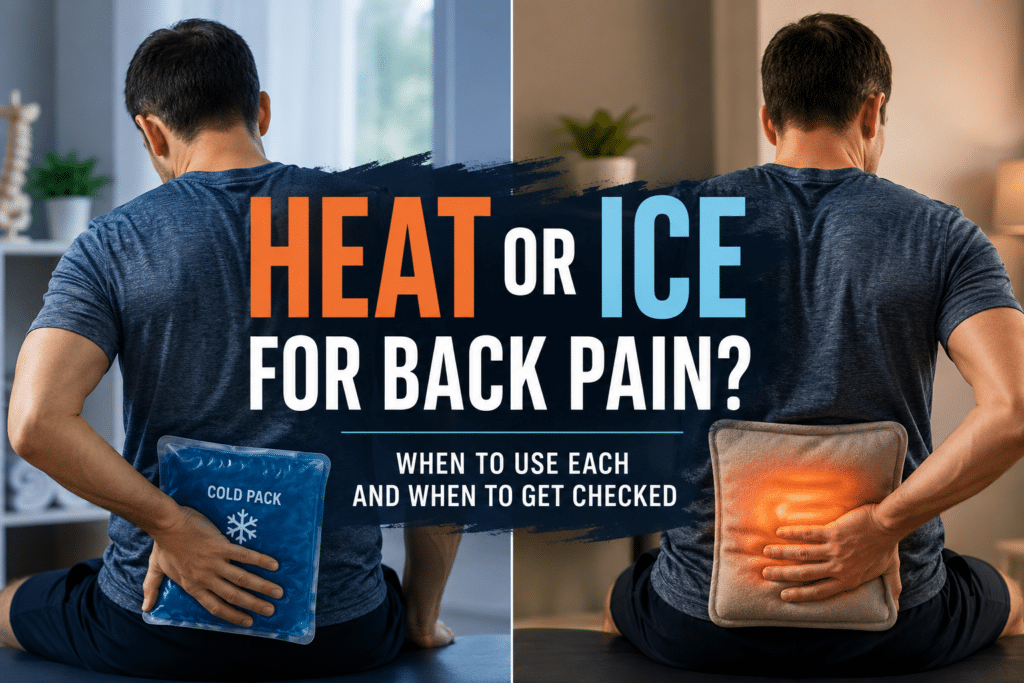
Heat or Ice for Back Pain? When to Use Each and When to Get Checked
Should you use heat or ice for back pain? The answer depends on how the pain started, whether the area feels irritated or swollen, whether stiffness or muscle tightness is involved, and how your symptoms respond.
In general, ice may be more useful for a recent strain, new irritation, or swelling, while heat may be more useful for stiffness, muscle tightness, or guarding.
Heat and ice can help manage symptoms temporarily, but neither one identifies why your back hurts or why the pain may keep returning.
Heat vs. Ice for Back Pain
May Be Better For
- Recent strains
- New irritation
- Minor swelling
- Temporary pain numbing
May Be Better For
- Muscle tightness
- Stiffness
- Muscle guarding
- Difficulty relaxing the area
These are general patterns, not absolute rules. If either option clearly makes the pain worse, stop using it.
When Should You Use Ice for Back Pain?
Ice is commonly used after a new musculoskeletal injury because cold can temporarily reduce pain sensation and may help limit swelling or irritation.
Ice may be worth trying when back pain begins after:
- An awkward lift
- A sudden twisting movement
- A sports or gym-related strain
- A minor fall or movement injury after serious trauma has been ruled out
- A sudden flare of an already irritated area
When Can Heat Help Back Pain?
Heat often feels better when stiffness, muscle tension, or guarding is a major part of the problem.
Heat may be worth trying when you notice:
- Stiffness after prolonged sitting
- Muscle tightness around the lower or mid-back
- Morning stiffness
- Restricted movement without obvious swelling
- Muscle guarding after the initial stage of a minor strain
A warm shower, bath, heating pad, or warm compress are common options.
Can Heat Make Back Pain Worse?
Yes, it can in some situations.
If an area is newly injured, swollen, very irritated, or already feels hot, additional heat may increase discomfort for some people.
That does not mean heat is universally harmful. It means the best choice depends on the type and stage of the problem.
If heat causes more throbbing, swelling, or pain, stop using it. If ice causes excessive numbness, burning, skin discomfort, or worsening symptoms, remove it.
How Long Should You Use Heat or Ice?
People with reduced skin sensation, neuropathy, circulation problems, or conditions that affect temperature perception should use extra caution and may need individualized guidance.
Which One Should You Try First?
Ice may be a reasonable first option.
Heat may be more comfortable.
Stop using it and reassess.
The problem may need more than home symptom relief.
Should You Use Heat or Ice for Sciatica?
Sciatica is different from a simple local muscle strain because symptoms may involve irritation or compression affecting the sciatic nerve or nerve roots in the lower back.
Heat or ice may temporarily make the back, hip, or surrounding muscles feel more comfortable, but neither one corrects nerve compression or identifies why the nerve is irritated.
If your back pain travels into the buttock or leg or is associated with tingling or numbness, you can read more about how sciatica can cause numbness and our approach to evaluating sciatica in Chicago .
What If Heat or Ice Helps but the Back Pain Keeps Coming Back?
Heat and ice are symptom-management tools. They do not tell you why the problem keeps returning.
Recurring back pain may involve factors such as:
- Restricted joint movement
- Muscle imbalance or weakness
- Repetitive work posture
- Training or lifting mechanics
- Hip or thoracic mobility restrictions
- Movement compensation from an older injury
- Nerve irritation
When Should Back Pain Be Evaluated?
Many uncomplicated episodes of back pain improve with time and conservative self-care. Persistent or recurring symptoms deserve more attention.
Consider having your back evaluated when:
- The pain keeps returning
- You repeatedly need heat or ice just to function normally
- Movement remains restricted
- Pain interferes with exercise, work, or sleep
- Symptoms travel into the buttock or leg
- You develop recurring numbness or tingling
- The problem is not improving as expected
Back Pain Symptoms That Should Not Be Managed With Heat or Ice Alone
Some symptoms require prompt medical evaluation rather than continued home treatment.
- New bowel or bladder control problems
- Significant trauma
- Progressive leg weakness
- Severe or rapidly worsening numbness
- Fever or signs of infection
- Unexplained weight loss
- A history of cancer with new unexplained back pain
- Severe pain that is progressively worsening
If you are unsure whether your symptoms require urgent care, seek appropriate medical evaluation rather than relying only on heat or ice.
Frequently Asked Questions About Heat and Ice for Back Pain
Is heat or ice better for lower back pain?
Neither is universally better. Ice may be more comfortable after a new strain or irritation, while heat may help when stiffness or muscle tightness is more prominent.
Can heat make back pain worse?
Yes. Heat may feel worse when an area is newly irritated, swollen, or already feels hot. Stop using heat if it clearly increases pain, swelling, or throbbing.
How long should I ice my lower back?
A common approach is approximately 15 to 20 minutes at a time, using a cloth barrier between the cold pack and your skin.
How long should I use a heating pad for back pain?
Heat is generally used for short periods such as approximately 15 to 20 minutes. Avoid excessive temperatures and do not sleep on a heating pad.
Can I alternate heat and ice?
Some people find alternating the two helpful, but there is no requirement to do so. Pay attention to which approach improves rather than aggravates your symptoms.
Does heat or ice fix the cause of back pain?
No. Heat and cold can temporarily reduce symptoms, but they do not determine why the back pain developed or why it may keep returning.
Find Out What May Be Contributing to the Problem
At Godo Chiropractic in Lakeview Chicago, Dr. Jason Godo evaluates joint movement, muscle function, posture, neurological findings, and movement patterns that may be contributing to recurring back pain.
New patients can schedule a $29 evaluation to determine whether chiropractic care is appropriate.