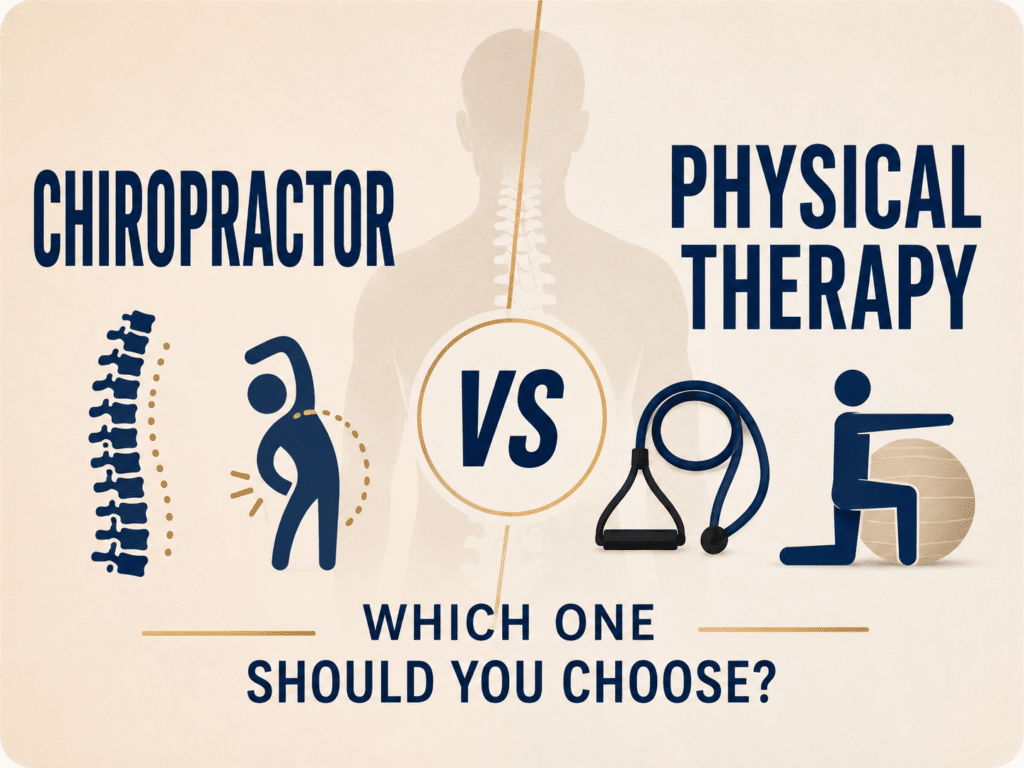
Understanding Chiropractor vs Physical Therapy
Chiropractor vs physical therapy is a common search because many patients are not sure where to start when they have pain, stiffness, an injury, or movement problems.
And honestly, it is a fair question.
If your back hurts, your neck feels tight, your shoulder is not moving right, or you have pain traveling into your leg, you may wonder whether you should see a chiropractor, a physical therapist, your medical doctor, or someone else entirely.
The answer depends on what is causing the problem, how long it has been going on, what your exam shows, and what type of care you need.
At Godo Chiropractic in Chicago, I do not look at this as “chiropractor versus physical therapy” in a competitive way. Both can be helpful. The better question is, “What does your body need right now?”
Quick Summary: Chiropractor vs Physical Therapy
The simple version is this:
- Chiropractors tend to focus on the spine and joint function, movement, posture, muscle tension, and symptoms associated with the nervous system.
- Physical therapists are involved in rehabilitation, progression of exercise, strength, mobility, and recovery after an injury or surgery.
- Both can involve hands-on care, assessment of movement, and exercises to do at home.
- Neither is necessarily better than the other.
- The best choice depends on your condition, goals, and examination findings.
- In some cases, chiropractic care and physical therapy can be a good match.
- “If symptoms are bad, getting worse, or have red flags, a medical check may be necessary first.”
The aim is not to choose a team. The goal is to first establish the right diagnosis and then select the care that makes the most sense.
What Does a Chiropractor Do?
A chiropractor evaluates and treats musculoskeletal problems, especially those involving the spine, joints, muscles, posture, movement, and nerve-related symptoms.
Patients often see a chiropractor for:
- Back pain
- Neck pain
- Headaches
- Sciatica
- Shoulder pain
- Hip pain
- Postural strain
- Stiffness
- Muscle tension
- Recurring pain that keeps coming back
Chiropractic care may include adjustments, joint mobilization, soft-tissue work, posture advice, stretching, corrective exercises, movement recommendations, and lifestyle modifications.
At my office, the adjustment is not the entire visit. It is one tool. The first step is understanding what is contributing to the problem.
What Does a Physical Therapist Do?
A physical therapist often focuses on restoring movement, strength, balance, mobility, and function after injury, surgery, weakness, or pain.
Physical therapy may include:
- Therapeutic exercises
- Strength training
- Mobility work
- Balance training
- Gait training
- Manual therapy
- Post-surgical rehabilitation
- Injury recovery programs
- Home exercise instruction
Physical therapy can be very beneficial when someone needs a structured strengthening or rehabilitation plan, especially after surgery, sports injury, weakness or loss of function.
For general information about physical therapy and how physical therapists help restore movement and function, the American Physical Therapy Association provides an overview of the profession.
How Are Chiropractic and Physical Therapy Different?
There is overlap between chiropractic care and physical therapy, but the emphasis is often different.
A chiropractor may place more emphasis on:
- Spinal and joint mobility
- Chiropractic adjustments
- Joint restrictions
- Nerve irritation patterns
- Posture and movement mechanics
- Muscle tension connected to joint function
- Hands-on evaluation of spinal and extremity motion
A physical therapist may place more emphasis on:
- Rehabilitation exercises
- Strength progression
- Functional training
- Post-surgical recovery
- Balance and gait training
- Return-to-sport progression
- Longer exercise-based treatment sessions
That does not mean chiropractors never give exercises or physical therapists never use hands-on care. Many do.
The difference is usually in the clinical focus and how the care plan is structured.
When Should You See a Chiropractor First?
A chiropractor may be a good starting point when your symptoms seem related to spinal motion, joint restriction, posture, muscle tension, or nerve irritation.
For example, patients often start with chiropractic care when they have:
- Back pain that keeps returning
- Neck pain or stiffness
- Headaches that may be related to neck tension
- Sciatica or leg symptoms
- Shoulder pain that may be connected to the neck or upper back
- Postural strain from work or computer use
- Stiffness that improves with movement
- Pain that feels mechanical or movement-related
In these situations, the first step is not just getting adjusted. The first step is evaluating how the joints, muscles, nerves, posture, and movement patterns are working together.
You can also review our conditions treated page for common problems patients bring to our office.
When Physical Therapy May Be the Better Starting Point
Physical therapy may be the better starting point when the primary issue is weakness, loss of function, post-surgical rehabilitation, balance problems, or a need for a structured strengthening plan.
Physical therapy may be especially helpful after:
- Surgery
- Major injury
- Fracture recovery
- Stroke or neurological injury
- Balance problems
- Significant weakness
- Loss of walking ability
- Sports injury requiring progressive rehab
In some cases, I may recommend physical therapy if I think a patient needs more exercise-based rehabilitation than chiropractic care alone can provide.
That is not a failure of chiropractic care. That is simply choosing the right tool for the job.
Can Chiropractic and Physical Therapy Work Together?
Yes. Chiropractic and physical therapy work very well together.
Chiropractic care can improve joint motion and reduce mechanical irritation; physical therapy can improve strength, endurance, and long-term movement control.
Some patients do well with either approach, especially if they have:
- Chronic pain
- Recurring flare-ups
- Postural problems
- Sports injuries
- Work-related strain
- Back or neck pain with weakness
- Movement habits that need retraining
The important point is that care should be coordinated and logical. More treatment is not automatically better. Better-matched treatment is better.
What If You Have Back Pain, Neck Pain, or Sciatica?
Back pain, neck pain, and sciatica are common reasons people compare chiropractic care and physical therapy.
If the main issue is joint stiffness, spinal restriction, muscle guarding, posture strain, or nerve irritation, chiropractic care may be a reasonable first step.
If the main issue is weakness, loss of function, post-surgical recovery, or a need for progressive strengthening, physical therapy may be more appropriate.
Sometimes the best path is both.
At Godo Chiropractic, I evaluate the problem first and then explain what I think makes sense. Sometimes that is chiropractic care. Sometimes that is physical therapy. Sometimes it is medical evaluation, imaging, or a different type of care.
If you are new to chiropractic care, you may also want to read what to expect at your first chiropractic visit.
How I Help Patients Decide the Right Next Step
Before recommending care, I want to understand what is actually going on.
During your evaluation, I may look at:
- Your health history
- Where the pain is located
- How long symptoms have been present
- What makes symptoms better or worse
- Posture
- Range of motion
- Joint mobility
- Muscle tension
- Movement patterns
- Neurological findings when appropriate
- Orthopedic findings when appropriate
- Your goals for care
From there, I explain what I find and what I recommend.
As both a chiropractic physician and a registered nurse, I also think it is important to recognize when symptoms may need additional medical evaluation. Not every problem belongs in a chiropractic office, and patients deserve clear guidance.
Does a Chiropractor Give Exercises?
Yes, many chiropractors give exercises, stretches, posture recommendations, or movement advice.
At Godo Chiropractic, recommendations may include home exercises when they make sense for the patient.
However, chiropractic care is not always the same as a full physical therapy rehabilitation program.
If your condition requires structured exercise progression, post-surgical rehab, or longer supervised strengthening sessions, physical therapy may be recommended.
The goal is to match the care to the patient, not force every patient into the same plan.
Is Chiropractic Better Than Physical Therapy?
Not automatically.
Chiropractic care and physical therapy are different tools. One may be better than the other depending on the situation.
Chiropractic care may be a better starting point when the problem appears to involve joint restriction, spinal mechanics, posture strain, or movement-related irritation.
Physical therapy may be a better starting point when the problem requires progressive strengthening, rehabilitation, balance work, or post-surgical recovery.
The best provider is the one who evaluates you properly, explains the findings clearly, and recommends the care that fits your condition.
When You Should Seek Medical Evaluation First
There are times when neither chiropractic care nor physical therapy should be the first step.
Seek medical evaluation first if you have:
- Severe trauma
- Possible fracture
- Loss of bowel or bladder control
- Progressive weakness
- Fever with severe pain
- Unexplained weight loss
- History of cancer with new unexplained pain
- Severe or worsening neurological symptoms
- Chest pain or shortness of breath
- Symptoms that feel unusual or alarming
This information is not meant to scare you. It is meant to be clear.
The right first step depends on the symptoms.
Frequently Asked Questions About Chiropractor vs Physical Therapy
What is the difference between a chiropractor and physical therapy?
A chiropractor often focuses on spinal and joint function, adjustments, posture, movement mechanics, and nerve-related symptoms. Physical therapy often focuses on rehabilitation, strength, mobility, balance, and restoring function after injury or surgery.
Is chiropractic better than physical therapy?
Not automatically. Chiropractic may be better for some mechanical spine, joint, or posture-related problems. Physical therapy may be better for strengthening, rehabilitation, balance, or post-surgical recovery.
Is physical therapy better than chiropractic care?
Physical therapy may be better when the main need is progressive exercise, strengthening, post-surgical rehab, or restoring function after injury. The best choice depends on the exam findings and your goals.
Should I see a chiropractor or physical therapist for back pain?
It depends on the cause of the back pain. If the pain seems related to joint restriction, spinal mechanics, stiffness, or nerve irritation, chiropractic care may be a good starting point. If weakness or rehabilitation is the main concern, physical therapy may be more appropriate.
Should I see a chiropractor or physical therapist for neck pain?
For neck pain related to stiffness, posture, joint restriction, or headaches, chiropractic care may be helpful. If the issue involves significant weakness, post-surgical recovery, or exercise-based rehabilitation, physical therapy may be recommended.
Can chiropractic care and physical therapy work together?
Yes. Some patients benefit from both. Chiropractic care may focus on joint motion and mechanical irritation, while physical therapy may focus on strengthening, endurance, and rehabilitation.
Do chiropractors give exercises?
Yes, many chiropractors give exercises, stretches, posture advice, and movement recommendations. However, a full physical therapy program may be more appropriate for certain rehab needs.
Does physical therapy include manual treatment?
Many physical therapists use manual therapy, stretching, mobilization, or soft-tissue techniques, depending on the provider and the treatment plan.
Who should not receive chiropractic adjustments?
Some patients should avoid or delay chiropractic adjustments, especially with possible fracture, severe osteoporosis, progressive neurological symptoms, infection signs, or symptoms requiring medical evaluation first.
How do I know which provider to see first?
If you are unsure, start with an evaluation. A good provider should explain what they find and recommend the right next step, even if that means referring you somewhere else.
$29 New Patient Evaluation
If you are trying to decide between chiropractic care and physical therapy, the best place to start is with an evaluation.
Your $29 New Patient Evaluation includes:
- Consultation
- Health history review
- Posture assessment
- Movement evaluation
- Doctor examination
- Personalized recommendations
No pressure. No long-term commitment required.
Final Thought
So, chiropractic vs physical therapy: what to choose?
The truth is, it is contingent upon your condition, your exam findings, and your goals.
If you experience stiffness in the spine, restriction in joints, posture-related pain, back pain, neck pain, headaches, or sciatica symptoms, chiropractic care could be a good place to start. Physical therapy may be a better fit if the main need is strengthening, rehabilitation, balance, or post-surgical recovery.
Dr. Jason Godo, D.C., R.N. at Godo Chiropractic sees patients from Lakeview, Lincoln Park, Wrigleyville, Uptown, River North, and surrounding Chicago neighborhoods who want real answers about pain, stiffness, posture, movement, and chiropractic care.
If you are ready to better understand what may be contributing to your symptoms, schedule your new patient evaluation today.
Dr. Jason Godo, D.C., R.N.
Godo Chiropractic