Understanding the Symptoms, Causes, and Treatment Options for Hiatal Hernia
If you’ve been dealing with acid reflux, heartburn, bloating, chest pressure, or a feeling that food gets stuck after eating, you may have wondered whether a hiatal hernia could be contributing to your symptoms.
Many people are surprised to learn that a hiatal hernia can sometimes affect more than digestion alone. In some cases, it may contribute to discomfort in the chest, upper abdomen, back, ribs, or even the diaphragm.
In my Chicago office, hiatal hernia is one of the most common non-traditional conditions patients ask about. While chiropractic care is not a cure for a hiatal hernia, many patients seek an evaluation to better understand how posture, movement, breathing mechanics, and pressure around the diaphragm may be affecting their symptoms.
What Is a Hiatal Hernia?
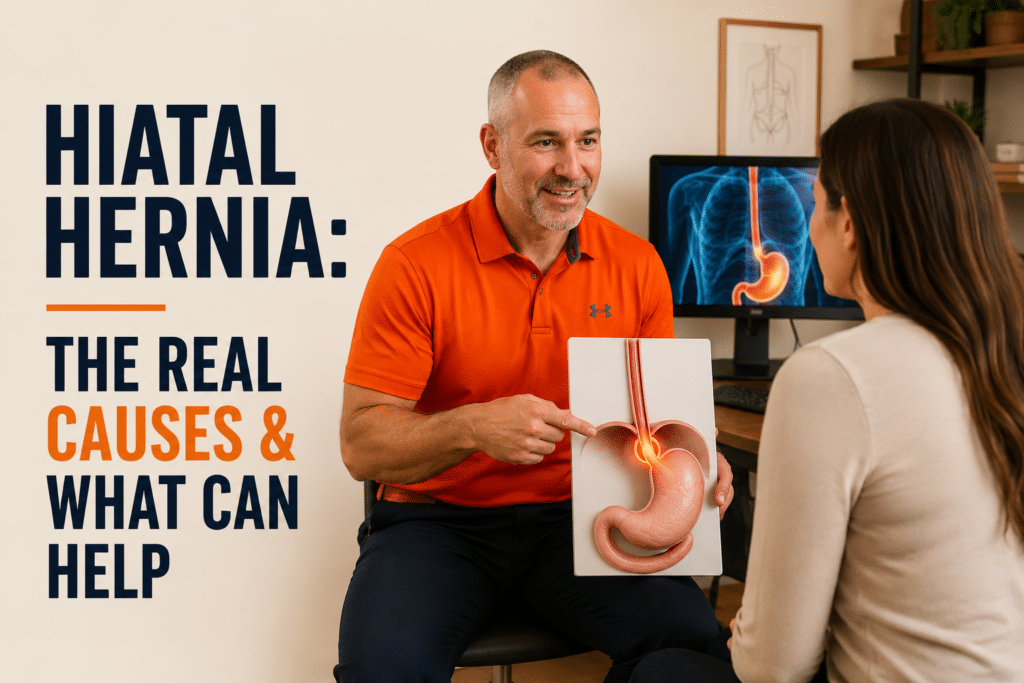
A hiatal hernia occurs when part of the stomach moves upward through the diaphragm and into the chest cavity.
Normally, the stomach sits below the diaphragm. However, when part of the stomach pushes through this opening, symptoms may develop.
The two most common types include:
Sliding Hiatal Hernia
This is the most common type.
With a sliding hiatal hernia:
- The stomach moves up through the diaphragm
- The stomach may move back down again
- Symptoms can vary throughout the day
- Acid reflux symptoms are common
Paraesophageal Hiatal Hernia
This type is less common but may require closer medical supervision.
With a paraesophageal hiatal hernia:
- Part of the stomach becomes trapped above the diaphragm
- Symptoms may be more severe
- Medical evaluation is important
What Are the Symptoms of a Hiatal Hernia?
Not everyone experiences symptoms. However, common complaints include:
- Acid reflux
- Heartburn
- Chest discomfort
- Upper abdominal pressure
- Bloating
- Burping
- Difficulty swallowing
- Feeling full quickly
- Sore throat
- Chronic cough
- Hoarseness
- Regurgitation of food or acid
Some people experience symptoms only after eating large meals. Others notice symptoms when bending forward, lifting, or lying flat.
Because symptoms can overlap with other conditions, proper evaluation is important.
Why Do Hiatal Hernias Develop?
Several factors may increase the likelihood of developing a hiatal hernia.
Common contributing factors include:
- Aging
- Increased abdominal pressure
- Pregnancy
- Obesity
- Chronic coughing
- Heavy lifting
- Constipation and straining
- Previous abdominal trauma
- Genetic predisposition
Additionally, posture may influence how forces are distributed through the abdomen and rib cage.
For example, people with significant forward head posture or rounded shoulders often have altered breathing mechanics. This is one reason I discuss posture with many patients who visit the office.
Tech Neck: How Phones and Computers Affect Your Spine
Can a Hiatal Hernia Cause Acid Reflux?
Yes.
One of the most common symptoms associated with a hiatal hernia is acid reflux.
Normally, the lower esophageal sphincter helps prevent stomach acid from moving upward into the esophagus.
However, when part of the stomach moves through the diaphragm, the function of this valve may become less effective.
As a result, people may experience:
- Heartburn
- Burning in the chest
- Sour taste in the mouth
- Chronic throat irritation
- Nighttime reflux
Many patients initially believe they simply have acid reflux when a hiatal hernia may also be present.
The Role of the Diaphragm
The diaphragm plays an important role in breathing, posture, and pressure regulation inside the abdomen.
When breathing mechanics become restricted, patients often experience:
- Rib tightness
- Mid-back tension
- Shallow breathing
- Postural changes
- Increased muscular tension
While these issues do not necessarily cause a hiatal hernia, they may contribute to discomfort and altered movement patterns.
Therefore, a comprehensive evaluation often looks beyond digestive symptoms alone.
A Common Patient Example
A patient may arrive complaining of:
- Acid reflux
- Chest pressure
- Bloating after meals
- Difficulty taking a deep breath
Often they have already tried:
- Antacids
- Dietary changes
- Sleeping on an incline
- Avoiding trigger foods
During an evaluation, we may also identify:
- Restricted rib movement
- Forward head posture
- Diaphragm tension
- Thoracic spine stiffness
- Breathing pattern dysfunction
Addressing those mechanical factors may improve overall function and comfort.
When Symptoms May Not Be Coming Only From the Hernia
Many people assume every symptom comes directly from the hiatal hernia.
However, other conditions can create similar complaints.
Examples include:
- Acid reflux without a hernia
- Gallbladder issues
- Food sensitivities
- Rib dysfunction
- Mid-back problems
- Stress-related digestive symptoms
Likewise, neck pain, shoulder discomfort, and postural problems may contribute to tension patterns throughout the upper body.
Shoulder Pain: When Is It Your Shoulder… And When Is It Actually Your Neck?
Lower Back Pain: The 3 Real Causes and How to Tell Which One You Have
What I Look For During an Evaluation
Every patient is different.
During a consultation and evaluation, I typically assess:
- Health history
- Symptom patterns
- Posture
- Breathing mechanics
- Rib cage movement
- Thoracic spine mobility
- Neck function
- Abdominal tension patterns
- Daily activities
- Lifestyle factors
The goal is to determine whether biomechanical factors may be contributing to the patient’s overall presentation.
Can a Chiropractor Help a Hiatal Hernia?
A chiropractor cannot repair a large hiatal hernia or replace appropriate medical treatment.
However, some patients seek chiropractic care to address associated mechanical issues such as:
- Postural dysfunction
- Restricted rib motion
- Thoracic spine stiffness
- Breathing mechanics
- Muscle tension
- Movement limitations
The objective is to improve overall function while helping patients better understand what factors may be contributing to their symptoms.
If you are unsure whether chiropractic care is appropriate for your situation, scheduling an evaluation can help clarify your options.
What to Expect During Your First Visit
If you’re considering an evaluation, you may also want to read:
What to Expect During Your First Chiropractic Visit in Lakeview Chicago
During your appointment, we will discuss:
- Your symptoms
- Previous treatments
- Medical history
- Lifestyle factors
- Goals and expectations
You will receive honest recommendations based on your individual situation.
What Does the Mayo Clinic Say About Hiatal Hernia?
For additional medical information, I recommend reviewing the Mayo Clinic’s guide to hiatal hernia.
Mayo Clinic’s Guide to Hiatal Hernia
The Mayo Clinic provides an excellent overview of:
- Symptoms
- Causes
- Risk factors
- Diagnosis
- Medical treatment options
Frequently Asked Questions About Hiatal Hernia
What is a hiatal hernia?
A hiatal hernia occurs when part of the stomach moves upward through the diaphragm and into the chest cavity.
What are the symptoms of a hiatal hernia?
Common symptoms include acid reflux, heartburn, bloating, chest pressure, difficulty swallowing, chronic cough, and throat irritation.
Can a hiatal hernia cause acid reflux?
Yes. Hiatal hernias commonly affect the function of the lower esophageal sphincter, allowing stomach acid to move upward.
Can a chiropractor help a hiatal hernia?
Chiropractic care does not cure a hiatal hernia. However, some patients seek care to address posture, breathing mechanics, rib motion, and movement restrictions that may contribute to discomfort.
Is a hiatal hernia dangerous?
Most hiatal hernias are not dangerous. However, severe symptoms, difficulty swallowing, chest pain, vomiting, or signs of obstruction should be evaluated by a medical professional.
When should I seek medical attention for a hiatal hernia?
You should seek prompt medical attention if you experience:
- Severe chest pain
- Difficulty swallowing
- Persistent vomiting
- Gastrointestinal bleeding
- Sudden worsening symptoms
Can a hiatal hernia heal on its own?
Why Chicago Patients Ask About Hiatal Hernias
Many of the patients I see in Chicago initially believe they are dealing only with acid reflux or heartburn. However, after discussing their symptoms, posture, breathing mechanics, and daily habits, they often discover there may be several factors contributing to their discomfort.
Whether you’re in Lakeview, Lincoln Park, Wrigleyville, River North, or another Chicago neighborhood, understanding the source of your symptoms is the first step toward finding the right treatment approach.
$29 New Patient Evaluation
If you’re experiencing symptoms that may be related to a hiatal hernia and want a thorough evaluation, our $29 New Patient Evaluation includes:
- Consultation
- Health history review
- Movement assessment
- Postural evaluation
- Advanced posture analysis technology
- Personalized recommendations
The goal is to help you better understand what may be contributing to your symptoms and whether chiropractic care is appropriate for your situation.
Final Thought
Many people spend years treating symptoms without fully understanding why those symptoms keep returning.
While a hiatal hernia is not always the sole cause of reflux, bloating, chest pressure, or digestive discomfort, it can be an important piece of the puzzle.
A thorough evaluation can help identify whether posture, breathing mechanics, rib function, spinal mobility, or other biomechanical factors may be contributing to your overall presentation.
If you’ve been searching for answers and still feel stuck, start by getting a proper evaluation and understanding exactly what factors may be driving your symptoms..
Dr. Jason Godo, Chiropractor in Chicago